Bordeaux Tickets

Quick Information

ADDRESS

134 Quai de Bacalan, 33300 Bordeaux, France

Plan your visit

Is the Cité du Vin worth visiting?

You enter the Cité du Vin under a ceiling that feels more theatrical than museum-like, then drift into dark, glowing galleries where screens, scents, and sound pull you from river trade to vineyard landscapes. It feels immersive before it feels educational.

It was built so Bordeaux could tell a bigger story than its own chateaux: wine as a shared cultural language shaped by trade, ritual, migration, and memory across continents. That global ambition is why the building and exhibition both move in curves rather than straight lines.

The payoff is a shift in perspective. You leave thinking less about labels and more about places, ports, people, and centuries of exchange — then finish with a glass over the Garonne from the Belvedere.

Skip it if: you want a traditional artifact-heavy museum or expect a multi-wine guided tasting; the core visit is self-paced, multimedia-led, and ends with one glass.

What to see inside the Cité du Vin?

Cité du Vin exterior and forecourt
1/8

The exterior and forecourt

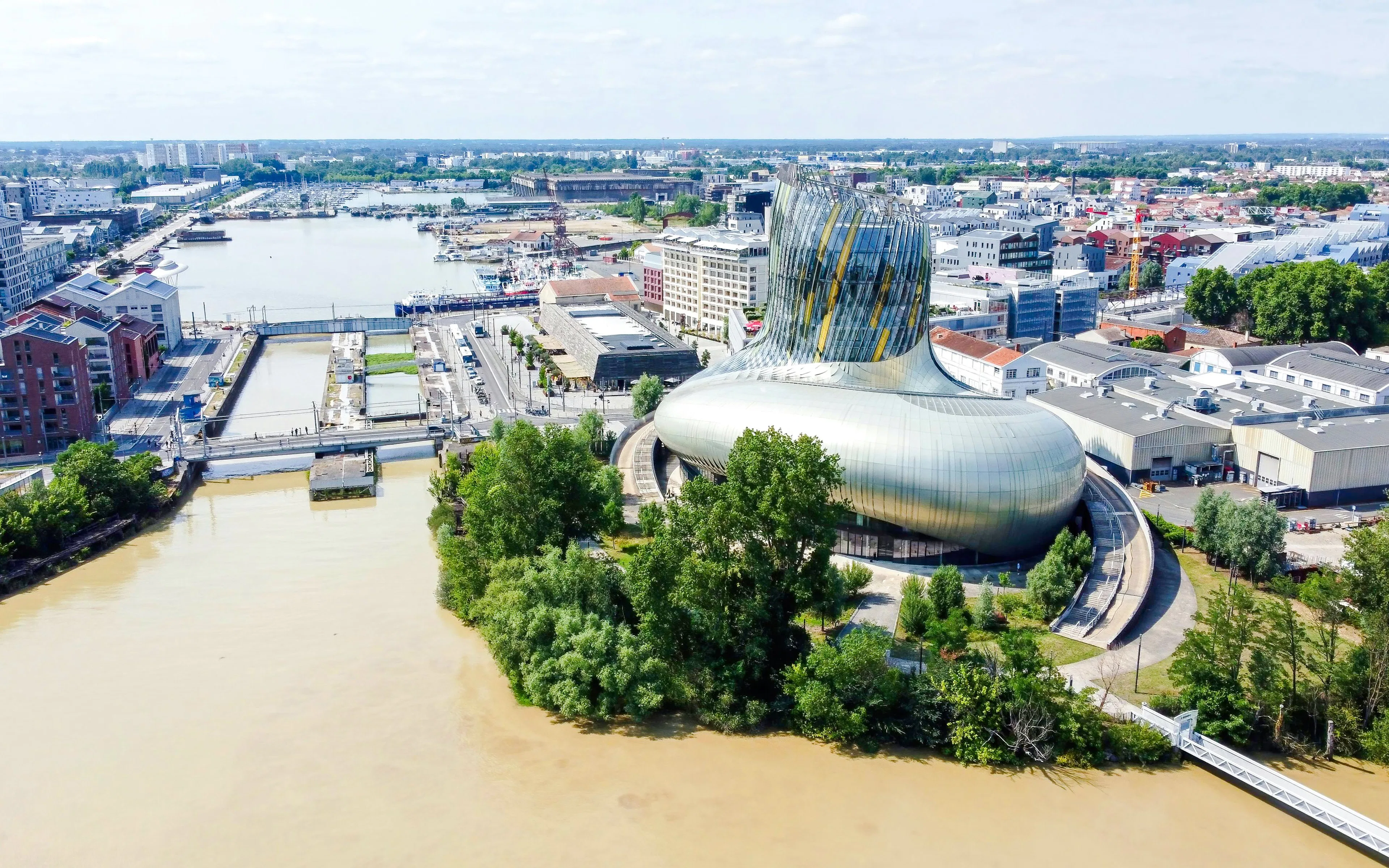
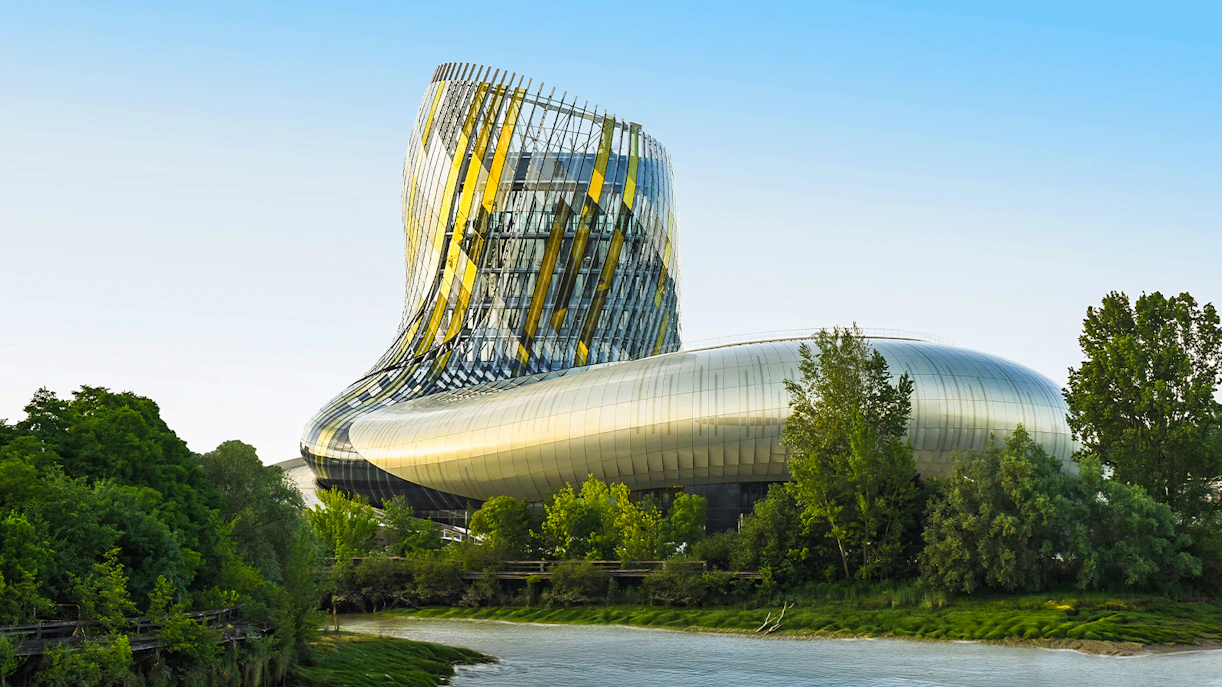
Before you even scan a ticket, the building does some of the work. Its gold-aluminum skin twists like wine in motion, and the river-facing side is best appreciated on foot from the Garonne promenade.

The Travel Companion

This handheld guide shapes the entire visit. It triggers content automatically in 8 languages, and the Junior mode makes the museum far more usable for families with children over the age of 7 years.

The Terroirs Table

A giant interactive world map that lets you explore wine regions by touch. Go here early; it becomes one of the busiest stations on weekend afternoons, and small groups can occupy the screens for a while.

The Vineyard Flyover Triptych

Three large screens carry you across wine landscapes in 17 countries. It is one of the least language-dependent parts of the museum, and even visitors who know little about wine usually pause here longer than planned.

The Six Big Bottles

These oversized scent stations explain the main wine styles through aroma rather than jargon. They are among the most tactile, memorable parts of the exhibition, especially if you are visiting with teens or first-time wine drinkers.

Wine, trade, and river routes

Several bays connect wine to shipping, ports, merchants, and migration rather than just vineyards. This is where the museum becomes clearest as a story about civilization, not just tasting culture.

The Bordeaux documentary

If you came expecting more local context, this is the section to prioritize. It gives Bordeaux’s vineyard history and grands crus useful weight without requiring a separate day trip into the wine region.

The Belvedere

The visit ends 35m above the city with one included glass chosen from a rotating list. Time this for late afternoon if you can; the queue grows near sunset, but the light over the Garonne is better.

How to explore the Cité du Vin

Time needed: Budget 2–3 hours for the standard visit, or 90 minutes if you are doing a disciplined highlights run with the Belvedere at the end. If you are adding a workshop, Via Sensoria, or dinner upstairs, the visit stretches naturally to 3.5–4 hours.

Walking route: Start on Floor 2 as soon as you arrive and head first to the Terroirs Table before screens get crowded. From there, move into the Vineyard Flyover Triptych and the Six Big Bottles while your attention is still fresh, then spend the middle of the visit in the denser history, trade, and art sections. Leave the Belvedere for last, ideally late in the day, because it works best as a closing moment rather than a mid-visit detour.

Must-see: The Terroirs Table, the Vineyard Flyover Triptych, the Six Big Bottles, and the Belvedere.

Optional: The Bordeaux documentary adds useful local context in about 10 minutes, while a tasting workshop adds 1 hour and more guided depth. Self-paced works well here because the Travel Companion is strong; guided value is highest only if you want sommelier-led tasting, not basic orientation.

Brief history of the Cité du Vin

  • 2008–2009: Bordeaux’s city leadership begins developing a flagship cultural project that would present wine as global heritage rather than a purely local industry.
  • 2011: XTU Architects win the international design competition with a flowing concept inspired by wine, vine movement, and the river’s eddies.
  • 2013: The first stone is laid, and construction begins on the Bassins à Flot waterfront site.
  • 2014: The Fondation pour la Culture et les Civilisations du Vin is formally recognized as a public-interest body to run the venue.
  • 2016: The Cité du Vin opens to the public as a major new Bordeaux landmark and immersive museum.
  • 2023: The permanent exhibition is partially renewed, updating several core zones and refreshing the visitor experience.
  • Today: The Cité du Vin remains Bordeaux’s flagship paid cultural venue, combining exhibition spaces, tastings, workshops, and panoramic city views.

Who built it?

The Cité du Vin was commissioned as a civic project under then-mayor Alain Juppé and realized by the Fondation pour la Culture et les Civilisations du Vin. XTU Architects shaped it as a building in motion, so Bordeaux’s wine identity would feel contemporary, public, and international rather than nostalgic or purely local.

Why Cité du Vin matters to modern Bordeaux

The Cité du Vin is more than a museum stop; it is part of Bordeaux’s modern riverfront identity. For decades, many visitors associated the city mainly with its classical center and wine merchants. This building helped pull attention north toward the Bassins à Flot district and gave Bordeaux a contemporary landmark that could stand beside its 18th-century facades without imitating them. That matters because the city now reads as both historic and forward-looking — a place where wine culture is still alive, not sealed behind cellar doors.

Frequently asked questions about the Cité du Vin

Yes, especially if you want to understand Bordeaux beyond vineyard day trips. The permanent exhibition, Belvédère tasting, riverfront views, and sensory displays make it a strong half-day stop.